Friday, 14 April 2017

Farewell to a Friend

A mucker from my youth Ewan Grant who lived at lower Carnoch passed away in New Zealand yesterday. Ewen and I fished and "borrowed" a few Salmon for beer and parties as youths (when they were plentiful) along with fellow friend and compatriot Ian Clark. I think it fair to say we were all a bit wild.

We also had a few mountain adventures and misadventures. When we were sixteen along with two others we were rescued from a gully on the N. Face of Aonach Dubh by Hamish, Walter and Wull in winter conditions late at night when the rope ran out with me hanging off the end. Given the conditions we were lucky to get away with hypothermia and frost nip. I never wore jeans climbing again, even if Levi jeans were the most stylish. A good bollocking from Sandy Whellans the local police Sergeant was well deserved for our general stupidity, and made a change from him forcibly removing us for under age drinking at Clachaig every Saturday night, or being chased in a relatives "borrowed" car to meet up with girls.

Ewen emigrated when only nineteen and made a good life in New Zealand having married a local North Island lass and made a family there. His older brother John is a well known local mountaineer and sailor and thoughts are with him and Ewen's family at a difficult time. I daresay Ian Clark like myself will raise a glass tonight and think of Ewen and his beaming wry smile, and reflect on the many parties, girls, alcohol, police chases and general mayhem of the time. Rest in peace old friend.

Tuesday, 20 December 2016

Avalanche Safety Kit

Zoom+ Box set is very good value for money for the three essential items.
The 3+ Box set sets you up with the best tools.
No need to ever upgrade.
Zoom+


Ortovox 3+ has good range and a "mark" feature
The 3+ has a good pinpoint search display

Let hope that's winter snow on the way at last.  If you need any avalanche safety kit I can do airbags, transceivers, shovels and probes as well as clothing and rucksacks from Ortovox.

Its a cut throat business as importers try and cut prices to keep trade while the strength of the pound makes getting the kit from Europe more expensive. I will not pretend I can compete with online companies that buy huge amounts and make it work on reduced margins by selling cheap and in volume.  I can't. But I try and get close. What I can offer is avalanche knowledge and practical "hands on" using the kit I sell in real rescues as well as training. The plus for customers is that I can offer some free training and advice if you buy from me. Advice is always free and I am happy to spend a little while on the hill showing you your transceiver and making sure you get the best out of it in the context of avoiding getting to that having been avalanched moment with the avy forecast and some knowledge. 

Click over image to view larger
I sell ARVA, BCA and Ortovox snow safety equipment.  I sell more of Ortovox now than other makes. The "smart antenna" technology of Ortovox transceivers (Beacons) is really good and I think makes a big difference. All new Ortovox beacons also have a Recco strip inside which is a nice extra.

The Zoom+ is a basic 3 antenna beacon and if your new and on a budget I can recommend the Zoom+ Safety set which has a good basic shovel and probe as well as info booklet on avalanches in the box.

I sell more of the Ortovox 3+ than any other beacon.  Its got an improved fine search and is a bit faster than the Zoom. It also has the "mark/flag" feature.  I recommend that folk learn how to search in a pattern before relying on this feature but the 3+ seems to mark well and as its limited to marking 3 victims the chance of signal overlap and overload is minimised. This is a good avalanche beacon. The safety set comes with a slightly better shovel with an extendable handle and a good 240pfa probe and all three in a box is cheaper. 

A really good shovel is the pro alu III as you can convert it to a hoe which in conveyor shovelling is the most effective way of clearing the snow from the point man. We cover this in avalanche training courses.

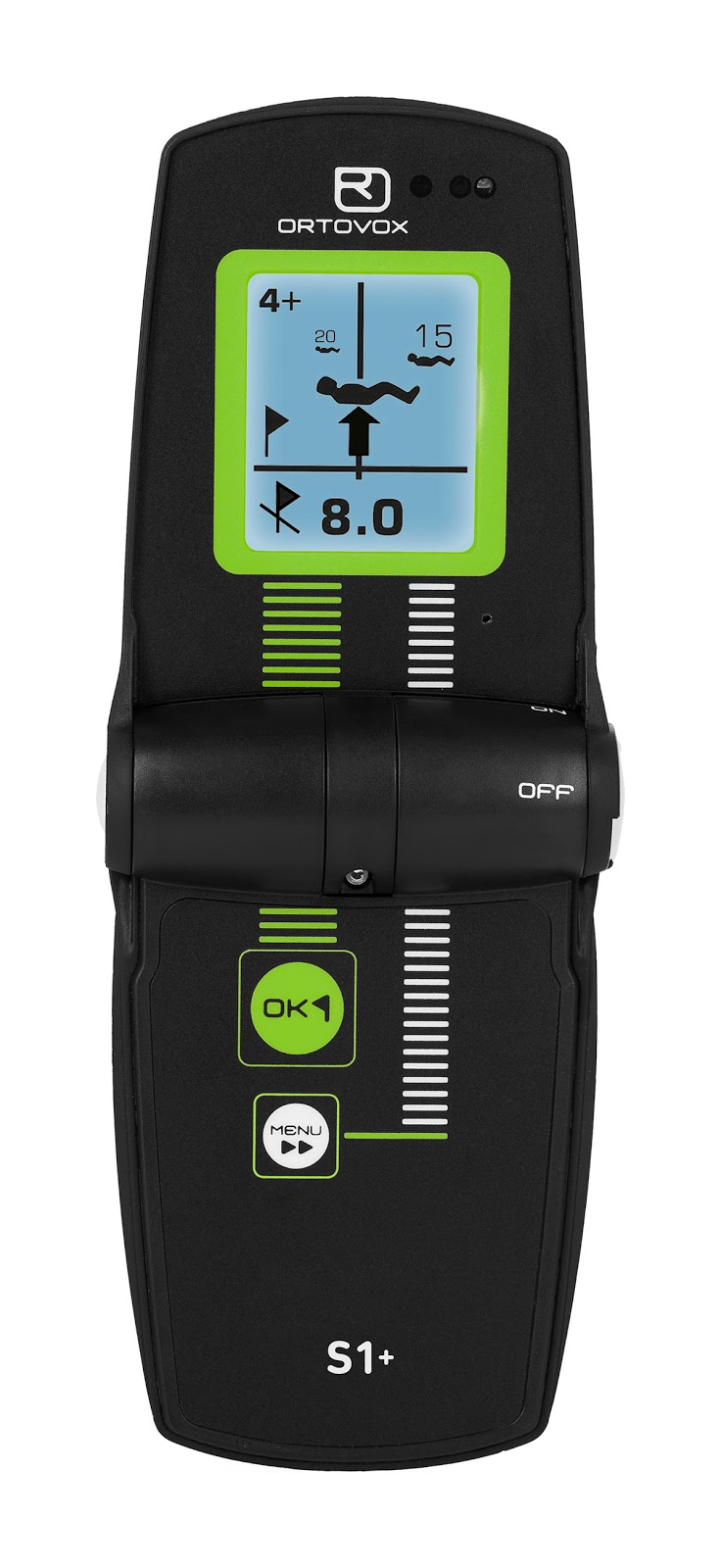
I personally have an S1+ which is the daddy of avalanche beacons. It has all the good features of the 3+ and a really good deep burial mode and a close proximity multi victim mode. The screen is big and its possible to see direction and distance to each victim as well as the strongest signal its locked into. The S1+  also has a longer range (about 15 metres longer) than other digital beacons. Its a good beacon for a professional guide or ski patrol.


The S1+ has a superior display and deep burial feature as well as close proximity multiple victims. £275 from me.

Monday, 19 December 2016

"we are all infinitely wise"


I am researching legal stuff on avalanches. Some mountain professionals are advertising and offering to investigate avalanche incidents independently. I wouldn't regard myself as being either qualified or desiring to take on such a burden as avalanches have provided me with enough drama and loss. However, its interesting to look back on precedent to satisfy my curiosity as to where these investigations lead. I have undertaken avalanche hazard evaluation for ski areas as part of prevention and rescue plans where foresight is needed, but post accident investigation makes me uneasy unless its low key and done as impartial data collection is done discreetly.

There is nothing wrong with bringing information and closure to relatives or families by answering questions informally about accidents but when it comes to skiing litigation is rampant in all aspects of events. This is so unlike mountaineering where folk, families included, accept shit happens. I worry that this could change in our ever more popular mountain sports. It set me thinking. If someone ends up making a case for a plaintiff, who then has the knowledge and experience to act for the defence?  Expert testimony often cancels itself out in the courts nullifying itself. But damage to reputations and press reporting wrecks lives. I hope  its left to the rescuers and police or at worst an FAI to conclude cause and effect in these things. Hindsight

With time on my hands I am going back over my early texts, listening to my recordings from tutorials I undertook on avalanche and education from many of this generations experts, one who is my Recco mentor.  I am also enjoying re reading some classic books Andre Roch, Sleigman and Atwaters texts are still among the best on the subject. I have linked some abstracts from within the books to give a flavour. Getting these books nowadays is expensive and looking back at my library its a lot smaller than it was. Like an eejit a few years back when a bit skint I sold loads of books to get a carbon race bike. I may have got £350 for "Extreme Rock" and the same for a book which I was able to get Ricardo Cassin to sign for me when I met him, but I sold my soul for a "thing" and wish I hadn't.

For an up to date take on the subject of avalanches Mark Diggins gave an excellent interview and I can recommend Secrets of the Snow by Chapelle

There is a lot on avalanche control and prevention as ski professionals which we would all do well to heed, especially in ski rescue where public safety is a big part of the job.

Avalanches as weapons


Wednesday, 14 December 2016

Niege et Avalanche

The best DVD you can get on basic snow science and avalanche. Even though an ANENA membre I still had to buy mine in France as they don't ship to the UK but its now possible to get it as a Vimeo download. I can't praise it enough as it touches all the bases.


SNOW AND AVALANCHES - Knowledge and Risk's Management from ANENA - CANOPÉ on Vimeo.

Wednesday, 16 November 2016

Know Before You Go at Glencoe

Winter is a great time to be in Lochaber. We are blessed with two ski areas both of which offer vastly different views and an experience both on and away from marked trails. Mountaineers also flock to the area as Scottish winter mountaineering is legendary requiring a toughness and resilience in often adverse weather, but amply rewarded by unique rime and ice formation or snow ice if you persevere.

If you’re a skier, then its “freshies” which are the holy grail. These first few tracks down a pristine slope with six inches or more of new snow are what it’s all about. Scottish powder snow is less Champagne and a bit more Sauternes but equally nice to float the wide skis down in big carving arcs of sweetness.

Whether mountaineer or skier, when the fresh snow comes its usually got wind behind it and somewhere on a lee slope the build-up of snow will be deep.  Avalanches tend to occur on slopes of an angle of about 30 to 50 degrees where this snow lays, and are most often triggered by the additional load of the victims. Sadly, many Scottish Corries have streams and gulches/gullies at the bottom and these trap the victim and so bury them deeply.


Folk need to “Know Before You Go”  

Get the gear and carry an avalanche beacon so you can be located, and which will also search for your friends. Three essentials including the Beacon also includes: Carrying a snow probe so a victim can be precisely located, and having a good alu shovel so you can dig someone out. Also, consider adding two Recco reflectors so your more searchable. Mountaineers shun the three essentials but Recco reflectors might at least give them a chance
Get some training on how to understand how avalanches occur, common cognitive mistakes and thinking traps that make us ignore obvious danger signs, and conditions. This will include how to interpret the weather and avalanche forecast and some basic understanding of snow crystals and how strong and weak layers’ form within a snow pack, also on how to search and dig out a victim and look after them. Glencoe Mountain has a state of the art training park for folks to practice with their avalanche beacons and digging and the ski patrol are always happy to give advice. I run some avalanche training up at Glencoe so please contact me via my web site www.crankitupgear.com for more information.


Get the forecast. Never go out without reviewing the weather for the day ahead and always look at the Scottish avalanche service forecast (SAIS) and take heed of the risk level and the forecasters observations. The bulk of avalanche incidents do not happen when the risk level is high but when its lower as folk assume it’s safe. Always bear in mind there is never no risk, just a lower risk.


Get the big picture and become a good observer of the precipitation, wind loading and conditions around you and underfoot, and add that to the information from the avalanche forecast and be prepared to change your objectives. The avalanche forecast is an area forecast and a Corrie or mountain may well have very different avalanche risk from local wind and weather effects. Look for “Red Flag" signs of recent avalanches, cracking or collapsing snow, new snow and drifting snow, also rapid thaw conditions. If these are observed, then change your route to a safer one or cancel your day and retreat.

Stay out of harm’s way. With the big picture, you will be looking around you and adjusting your risk assessment constantly. If a mountaineer look above you as someone may trigger a cornice collapse which takes you out. You may commit yourself into enclosed terrain where, if an avalanche spontaneously triggers you have nowhere to run. A ski tourer might skin up into similar terrain and be trapped. Or, if dropping into a Corrie you could be taken into a terrain trap as mentioned before. If its misty or a whiteout you have no way of knowing who or what is below you and if it does avalanche your friends cannot see you from above and may be unaware.


Terrain Trap - No where to go and buried deeply!

Important Considerations Before the Point of No Return, or Dropping In

Angle. Most avalanches are triggered on slopes roughly between 30 and 50 degrees. Below 30 degrees’ victim triggered slab avalanches are less common and above this angle slopes purge more frequently. The "Sweet Spot" where most avalanches are triggered is about 40 ish degrees with over 90% of victim triggered slides occurring in a 7-degree range bracketing that sweet spot. You can conclude from this that angle is an important part of slope assessment and subtle changes of angle on a given slope can have major consequences, therefore route choice and awareness of slope angle is important. Modern phone apps make judging the angle much easier. Rule of thumb for me personally is that as the avalanche forecast risk for a given altitude and aspect goes up - then the angle and altitude of what you ski comes down.

Anchors. What is the snowpack connected to? Have you been following the weather and avalanche forecast? Are there weak layers within the snowpack? Tree's and rocks can hold a slope as your friend or can be weak spots as your enemy where sun, heat, graupel or hoar frost has gathered. Subtle angle changes create trigger points at these places. Tree's are also natures cheese grater if you get taken into them. Ask yourself what the slope you are on is linked into from the underlying snowpack. Unstable snowpacks can often propagate a collapse into nearby slopes and draw an avalanche into lower angled terrain.

Aspect. Which compass direction does the slope you want to ski or travel face. Like angle, subtle changes in aspect can take you from a safe slope onto a loaded one. Carry a compass and learn about "slope aspect" i.e. which way it faces, as both a navigation and safe travel tool.  The SAIS forecast gives you the necessary hazard warning for compass direction but you need to apply it on the ground accurately. Some phone apps can help with this and even give you the area forecast 

Altitude. You can see by looking at the SAIS forecast that the hazard risk is most often greater with altitude, even in Scotland. The rate of snow deposition is higher with height, and the wind is also stronger increasing side loading of slopes. On dodgy days stay lower as well as skiing lower angled slopes

Complexity. As mentioned above. Be aware of subtle changes in angle and aspect and that localised instabilities are hidden and like a landmine can link one triggered mine to a chain reaction and a small slide gathering surrounding instabilities into a major avalanche event. Learn to read mapping for subtleties of terrain features and how snow may be affected, and think safety by pre-imagining what could go wrong. If it's a complex route, then it’s often unsafe as there are too many unknowns. Learn to know what you don't know!

Commitment. Always have a plan "B" so that if conditions change or are not what you expected you have another safer option. Commitment to a slope can mean no bail out options, i.e. having nowhere to go.  If you look at the pros on YouTube they choose their line so they can bale out onto a spine and have good runouts, and that's where the next "C" comes into play - consequences.

Consequences. If it’s an amber light's on in your head so you’re in a go/no go process, then add consequence into the thought mix. Are there crags, hollows, stream beds, tree's or any other terrain features that could shred you or trap you if there is an avalanche.

Micro terrain can have macro consequences 
So, as a final thought. Get the gear, get the training, get the forecast, get the big picture, and stay out of harm’s way. 


Davy Gunn
Avalanche Educator and Instructor